A Green Party that will win
July 5, 2023
Part One
The collapse of civil society, the decay constitutional governance, and the stranglehold on the economy of multinational corporations that work,, hand in hand, with the military in a push for world war has created in America an unquenchable thirst for a political alternative. As a political party possessing a national infrastructure that is capable of offering something other than the punch-and-judy show put on by the Democratic and Republican Parties connected at the waist, the Green Party has an unprecedented opportunity to play the central role in American politics.
However, before the Green Party can seize this opportunity, it must first decide what sort of a political party it wants to be.
The Green Party could transform itself into the most powerful political movement in the United States since the anti-slavery movement of the 1850s, and do so in a short period of time, if it vows to return the United States to the citizens and to wrest away control of government from the multinational corporations and banks–and the billionaires who lurk behind them. If the Green Party stands unconditionally for constitutional rule and an economy that is focused on the long-term needs of citizens, it can build a broad coalition of the disaffected who are disgusted with the prospect of a Biden-Trump zombie apocalypse. That is to say that is not too late for the Green Party to transform itself into a force that could win the 2024 presidential election hands down, and make deeps inroads in the Congress and in state politics. Moreover, by exposing the deep rot within the media, financial institutions, and political parties, the Green Party could set off a social and political revolution that will change everything.
Such a shift cannot be achieved by magic; if there were no costs involved, people would carried out that political revolution a long time ago. No, the rise of the Green Party requires the moral bravery to face crippling problems that other politicians are afraid to mention, the ethical vision to launch an ambitious plan restore deliberative democracy to the United States by ending the privatization of governance that stretches back to the unconstitutional establishment of the Federal Reserve in 1913, and the ghastly contract with global finance signed in blood with the Kennedy assassination of 1963. That means the Green Party must be a political party with a real vision, not a catchy marketing slogan. It must be a party that is willing to take on the IT and finance giants and to rip the mask off the parasitic military industrial complex that has sunk its proboscis deep into the economy.
If there is moral commitment, the financial disadvantage of the Green Party will quickly become the decisive advantage in that the Democratic and Republican Parties have lost all legitimacy because they promoted devasting foreign wars after the notorious 9/11 incident (in which they are both implicated) and then they embraced together the COVID 19 operation in 2020 that allowed multinationals to wage unlimited warfare against our citizens.
Remember that the Republican Party in its original incarnation rose to prominence quickly when the rich and powerful tried to extend slavery throughout the United States in the 1850s and it was able to win the presidency in 1860 as a result of the vacuum created by the collapse of the Whig Party (a political crisis similar to the current corruption of the Democratic Party by IT multinationals).
That is to say that if the Green Party asserts itself as a political vanguard, the only party that is not financed by corporations, the only one able to speak out on issues that others will not touch, the Green Party will not only have overwhelming moral authority, it can effectively assert that the other political parties are NOT qualified to field candidates for any election because of their active participation in state crimes.
The Japanese philosopher Ogyu Sorai put it this way, “There are two ways to play chess. One is to master the rules of chess so completely that one can win in any situation. The other is to make up the very rules by which chess is played.”
That second option is precisely the strategy that will bring the Green Party to prominence: demand that the rules of the entire game be changed so as to correspond with the Constitution itself—a text that defines what is and what is not government. Then, and only then, can the Green Party demand that the interests of the citizens, not the rich and powerful, are the primary responsibility of government.
But, if the leadership of the Green Party lacks the moral courage to take such a stand, to make efforts that could cut short vacation plans, there is another alterative that they may choose.
The Green Party can be a feel good about yourself, “think left, live right,” weekend meetings over café lattes identity politics party that avoids hot topics that might disturb the digestion of some party members, topics such as the reemergence of slavery, the drive for world war by multinational corporations, medical mass murder by vaccines, and the spread of deadly secret governance at the federal and state level.
But if they make that choice, it will mean that Green Party has zero chance of winning any major elections in our lifetimes, but perhaps it can help ease the consciences of educated Americans who feel a need to affirm that they are doing something, anything, as long as there is no risk to their TIAA-CREF retirement funds, as long as it does not require them to confront the lies that they are fed day and night by the media and by academic institutions.
That would be a Green Party that gives the impression something is happening when, in fact, not much is happening at all.
There is no scenario in which the Green Party slowly expands over the next twenty years. Either the Green Party makes a moral commitment to the battle against global capital and the emergence of secret governance today, or it will be regulated to the margins forever, or perhaps made illegal—as Donald Trump suggested in his recent speech of June 27 for the Faith and Freedom Coalition, a speech in which he called for the deportation of all socialists and Marxists, including American citizens.
I attended Green Party meetings in Champaign, Illinois from 2001 to 2004 and I was delighted to meet others who shared my concerns about the growing inequity in American society.
At the same time, however, I was deeply disappointed that those members avoided discussion of the false flag 9/11 operation or of the blatantly totalitarian governance of the United States under the Bush administration. The greatest threats to the United States, then and now, were considered taboo for most members of the Green Party.
Where we stand today
I declared myself as an independent candidate for president in 2020 because it was clear that the Democratic and Republican parties were so corrupt as to be little more than marketing gimmicks for the multinationals. Moreover, it was also clear that the alternative parties were incapable of fielding anyone who would address the real crisis in America at the time: the launch of a military-directed, multinational fear and intimidation campaign, better known as operation COVID-19, which was aimed at frightening and then impoverishing the population, then killing millions with so-called “vaccines.”
For me there was really no alternative but to run a real campaign for president even if it bankrupted me, even if it forced me out of the United States, even if it ended my friendship with those who could not bring themselves to abandon the sinking ship.
Sadly, the campaign of Howie Hawkins in 2020 confirmed my apprehensions about the Green Party. My disappointment had nothing to do with the personal qualities of Mr. Hawkins. The problem was that, whether because of conditions imposed by upper-middle class donors, or by classified directives issued by Homeland Security, the Green Party limited itself to addressing the topics permitted by the corporate media in a somewhat more thoughtful manner than the Democratic Party. It did not seize the initiative and it did not try to define the rules of the political game.
Qualifying to be a candidate for the Green Party
I was delighted when the Green Liberty Caucus of the Green Party recently reached out to me and invited me to speak with its members, and with other members of the Green Party, about what needs to be done to protect our country, and our Earth, in this dark hour.
Let me state for the record, first and foremost, that becoming the nominee for president of the Green Party is not my goal and that I feel that I can be most effective as an independent candidate running for truth politics even if I am never mentioned by the New York Times, Fox News or any other self-appointed arbiter of truth and relevance.
That said, I have learned an immense amount from the wise members of the Green Party over the last few months and I feel that this dialog, if extended to other possible candidates, and to citizens who might become active in the Green Party in the future, can be transformative for the Green Party, and for the United States, regardless of my fate.
If, in the course of events, I am allowed to enter the Green Party presidential debates and there is a consensus that I would be an appropriate candidate for the Green Party, I would obviously immediately align with the Green Party and file with the FED in that capacity.
If the Green Party continues to host open forums that are not subject to the strict presidential commission rules, and invites all possible candidates to debate and to present their visions and their policies, the Green Party will become the vanguard for social transformation.
That would mean that the Green Party demonstrates that it functions as a democracy, as opposed to the authoritarian forms of governance found in the other political parties, and that will send out a spark that can set the nation on fire.
The process by which the Green Party’s Presidential Campaign Support Committee (PCSC) selects the nominee for president reveals telltale signs that the choice is determined by financial support, rather than moral commitment and political vision.
For example, candidates for the nomination must demonstrate that he or she has a website with “online donation capacity” and that he or she has “demonstrated fundraising success consistent with running a viable national campaign by either (1) raising at least $5000 where no more than $250 from any individual donor may count towards this threshold and least $300 must have been raised from at least five states, or at least $100 from at least ten states OR (2) having received donations of at least $10 each from at least 100 individual donors.”
Although a low-threshold for an upper-middle class intellectual in American society, I can testify that these criteria are difficult to meet for anyone who is dedicated to truth politics and engagement with the real threats to our country.
Having a website that allows for on-line donations is irrelevant until the candidate is selected and then can easily set up using the core infrastructure of the Green Party after the nomination is determined.
A candidate dedicated to truth politics, someone who calls out for an investigation of the 9.11 incident, or the COVID-19 operation, is going to be flagged immediately by Homeland Security and subject to low-intensity operations to “combat false information” without exception. Although those operations may not result in the candidate being dismissed from the party, or being subject to harassment or defamation campaigns, it means that he or she will not be able to raise money regardless of his or her popularity.
Everyone in an administrative position in the Green Party knows this fact, and they have witnessed such campaigns against individuals within the Green Party, and against Dennis Kucinich and Ron Paul (and others) in the mainstream parties. Please, let us not kid ourselves as to the reality of American politics.
Moreover, if a possible candidate takes a position that is not just a vague opposition to ‘imperialism” or “capitalism” but that spells out in detail how the privileged position of Wall Street and the Federal Reserve in the American economy can be dismantled, step by step, he or she will meet with opposition from privileged members of the Green Party who do not want to question the basic assumptions of American economic policy.
It may seem natural that a candidate needs to show his or her ability to raise money in order to be seen as a viable candidate. After all, the media ranks candidates in terms of their ability to raise money. That is correct; journalists in the United States assess the viability of candidates for office in terms of the degree to which they are indebted to the rich and powerful.
The candidates who are most capable of leading the Green Party to victory will be precisely those committed to addressing taboo topics and building a mass movement.
Perhaps we need to think about the qualifications for the nomination that are NOT included in “Rules and Procedures of the Green Party of the United States.” First, there is no credit given for moral courage, for commitment to the fight for social justice even at considerable risk to oneself.
Nor is there any mention of the need for honesty about state crimes.
For that matter, the creativity of the candidate, her or his ability to address issues in an effective manner, to inspire and lead the people, are not mentioned either. But these attributes are precisely what the candidate of the Green Party must have in order to take on the moneyed interests through a mass movement of working people.
If the Green Party is administered like a little Democratic Party, except a bit more progressive in its platform, a bit more attuned to the sensibilities of a narrow strip of thoughtful professors, doctors, and lawyers, then the party should just give up on running presidential candidates because it has zero chance of garnering sufficient funding. A Green Party that merely serves as a lobby, or caucus, to push the Democratic Party in a more progressive direction is a betrayal of the trust, and the personal efforts, of workers who support the party precisely because it is presented to them as an alternative.
No wealthy individual gives money to political parties unconditionally. The money is conditional on the organization not taking a stand on issues that might go against the perceived interests of the party member who can afford to give $5,000.
A new strategy for the Green Party
Among the political parties that are able to function in the totalitarian environment of the United States, I would rank the Green Party as number one.
In order to win, the Green Party will have to rely on the economic support of ordinary people who can barely afford to pay their rent, unlike the Democratic and Republican Parties funded by multinational banks who print up their own money. The Green Party cannot honestly take the money of working people unless it is committed, heart and soul, to the transformation of society.
Please allow me to suggest a few approaches that might make the Green Party central in American politics in a short period of time, probably in time to win the 2024 presidential election.
The Green Party as a democracy
First, the Green Party should be open and democratic in its internal administration if it wants to convince the citizens that it is serious about the democratic process.
I remember vividly my participation in Green Party events in Champaign, Illinois (2001-2004) and the manner in which the decisions made at the local level were not represented democratically in the party at the national level and how many topics were made taboo in the debates in a manner I can only describe as authoritarian.
There was literally nothing that I could do, or be a part of, in the Green Party other than attending discussions and listening to people; there was no way to organize, to make meaningful proposals that would be considered and implemented after a democratic process, or to advocate for strategies at the national level.
If the Green Party transforms itself into a democratic institution, it can seize national political leadership in a manner that the Democratic and Republican Parties can never do because they are by their very nature dependent on multinational corporations that abhor deliberative democracy.
Theda Skocpol wrote a thoughtful book entitled “Diminished Democracy: From Membership to Management in American Civic Life” in which she describes how the participatory institutions in America have been killed off so that the citizen can no longer play a direct role in the NGOs, or the coalitions, and the political parties that supposedly represent their interests. If political parties do not allow local members to democratically determine policy, to advance ideas based on their merit and relevance, without concern for how much money they have in the bank, then we cannot expect state government or federal government to be democratic either.
That is to say that Green Party will succeed, not because it has money and can run TV commercials in swing states, but rather because the Green Party itself will become a model for democracy that will be emulated by cooperatives, local government, and eventually the federal government itself. As Gandhi advocated, we must “become the change we wish to see in the world.”
If the party does not include citizens at all levels of its administration, it can never lay the foundations for participatory civil movement capable of overwhelming the corporate parties in the streets, and among workers at Walmart and Amazon, by organizing the people in a fearless and visionary manner.
Embrace truth politics
As I watched the United States enter into a series of classified military agreements with allies that virtually guarantee an unstoppable drive for war with Russia, and then with China, over the last few months, and then I saw the preparations for the NATO Summit at Vilnius, Lithuania, planned for July 12, a meeting at which heads of state will sign off on a pile of military directives they have never read, I remembered the speeches delivered by the educator Rudolf Steiner in his lecture series, “The Karma of Untruthfulness.”
Steiner spoke out in 1917, as the nations of Europe tore each other apart precisely because of such secret military treaties that transferred the chain of command to an unaccountable military cabal–on both sides.
Steiner held that the previous decades during which establishment figures came to accept lies and deceptions as “the way things just are” was precisely what made that horrific war possible. Steiner wrote, “People do not feel a duty to pursue the actual truth, to seek truthfulness backed by facts—indeed, the very opposite mindset now rules the world, increasingly expanding its influence. External needs are always the consequence of what takes place in the minds of men.”
His point is as true today as it was then: playing stupid, accepting lies about the 9.11 incident, about the transfer of trillions of dollars to investment banks via quantitative easing, and about the assault on humanity under the COVID 19 operation is not a practical response, but rather a suicide pact.
Only a brave quest for absolute truth can save us from the current drive for world war.
The Green Party must follow the imperative of the African American author James Baldwin,
“Not everything that is faced can be changed, but nothing can be changed until it is faced.”
Or, as Frederick Douglass put it, “People might not get all they work for in this world, but they must certainly work for all they get.”
It will be the willingness of the Green Party to take on forbidden topics that puts it in the driver’s seat, not its willingness to conform with the absurd idea that lies must be embraced as a condition for political action. That horrific ideology has infected all of the political operatives in Washington.
Truth politics is not an option, but rather the only way to save the United States from war abroad, and from radical institutional collapse at home.
Our culture is so smothered in denial, so fragmented by deep psychological trauma, that we must face the lies that have seized control of our country before we can hope to achieve anything of lasting value.
None of the candidates for president, or for any other office in the United States, have demanded that these crimes be investigated, that those responsible be arrested, or that the assets of those who planned these actions be seized.
Our failure to address these crimes, and the gangrene that they have left behind in our political institutions, has created a more dangerous system of governance, one in which the push for nuclear can go forward without any opposition, or even debate—something that was not true before.
Do you remember how Senator Robert Byrd was allowed to speak out against the invasion of Iraq in 2002? Do you remember how Dennis Kucinich and Ron Paul were able to draft articles of impeachment (House Resolution 1258) against George W. Bush in 2008?
Such actions are no longer possible precisely because we have been foolishly silent on the threat to government institutions posed by state crimes left festering. The situation will not get better.
Part Two
A Green Party that takes a stand and offers concrete benefits to working class people
The Green Party must offer something of real value to working people in return for their support and it must make membership in the Green Party something of profound significance for those brave enough and passionate enough to join the struggle to expand the party across the country rapidly in the face of massive opposition from corporate oligarchy.
In order for a political party to be successful, there must be a fundamental contract between the party and its supporters.
The Republican Party can count on strong support from multinational corporations, arms manufacturers, and billionaires because it promises, and it delivers, contracts with the Federal government worth billions of dollars, promotes endless war, and carries out a massive deregulation of the economy that allows the wealthy to consolidate their power.
The Democratic Party once relied on the support of unions and citizens of communities who faced oppression or discrimination for support. It returned that support by pushing for legislation with real teeth from the 1930s until the 1970s.
But the decay of institutions in the United States created a political wasteland wherein Bill Clinton was able to embrace the concept of “democracy for multinational corporations,” a radical reinvention of the Democratic Party. In this new political reality, he and his strategists abandoned the appeal to citizens at the local level for support and instead cozied up to IT firms, investment banks, and entertainment conglomerates who could deliver big money and who felt they were not getting the political access that oil companies and real estate speculators enjoyed with the Republican Party.
A real political competition between the parties resulted, but it was a brutal war between divergent corporate interests. Google was the victim of discrimination and oppression and it deserved to be granted the same welfare benefits as Lockheed Martin. The needs of ordinary workers dropped out of the equation.
In order to seduce intellectuals into accepting this scam, the salaries of administrators at universities and NGOs, at newspapers and TV stations, increased until they were many times the salaries of ordinary workers. It was a bribe given to those in authority who were collaborators in the corporate takeover of the entire country in the 1990s.
Thereafter, the Democratic Party focused on catchy items like abortion, ethnic identity, and the needs of an imagined “middle class.” These issues were treated using flashy advertising campaigns, while political operatives offstage dismantled the mechanisms by which citizens could have actual input in the formulation of policy within the party, or in government.
Policy was made up by consulting firms working for corporations who then fed it to the Democratic Party. The politicians started spending all their time raising the big money needed to sell pro-Democrat citizens this poisonous agenda through the commercial media, and other hidden persuaders in academia, and elsewhere.
The Democratic Party became the Trojan Horse offered to the progressives who wanted to save the remaining scraps of the New Deal, and the Republican Party became the Trojan Horse for those who stressed values and spiritual independence.
The fatal assumption of the Green Party, even today, is that somehow the Green Party will raise enough money from its supporters to compete with multinationals, somehow it will convince the corporate media to start covering the Green Party in the way that it covers cardboard messiahs like Donald Trump, and somehow, progressively, increase the impact of the party within the institutions of government and media that are now so hostile to workers.
If the Green Party cannot offer the working people who support it concrete benefits right now, and not just vague promises of a more just and equal society at some future date, it has zero chance of coming to power in a political system controlled by two political parties who actively block all efforts of third parties and independents to participate in the political debate.
The Congress offers a silly debate between harmless politicians for the entertainment of citizens which serves as a velvet glove to cover the steel fist of corporate power. The only solace offered to citizens is a narcissistic culture that focuses on personal needs rather than solidarity and that seduces us, dragging us deep into the cavern of identity politics from which there is no return.
If the corporate parties depend on money, the Green Party must depend on people, brave, unrelenting, motivated people who are ready to work together in communities, and across the nation, twenty-four hours a day. That means that the Green Party right does not need any money. It needs inspiring ideas, powerful speeches, effective community organizing, practical knowledge, accurate journalism, and, above all, tangible services for the community.
A single mother who has no job, but who is willing to work hard organizing the people on her block, building a committed local movement against corporate control that is economically independent, would be far more valuable for the Green Party than an upper-middle class lawyer who gives five thousand dollars a year to alleviate the guilt that he feels about his privileges.
The Green Party as the government that does not exist
There is a truth that many purposely hide from us: The Green Party does not have to win elections before it can start transforming American society.
The Green Party can start today to play the critical role of organizing the people, starting with the working class, to form their own autonomous organizations at the local level for self-help and mutual support. Voting for a Green Candidate will be just a part of that effort.
The federal and state governments have been completely privatized, transformed into the sock puppets of IT firms serving multinational banks. We face two forms of totalitarian rule: the enfeebled and castrated government at the state and federal level and the cruel and despotic government of finance referred to as “the private sector.”
The Green Party can serve the role in society that the government once did, and do so immediately in accord with the Constitution. That is to say that if the Green Party follows the Constitution, and no one else does, that will give it tremendous power because the Constitution by its nature defines what is, and what is not, the United States of America.
One immediate role for the Green Party is providing healthcare. Citizens are forced to accept the overpriced, and downright deadly, healthcare services provided by the hospitals that have been taken over by global capital, hospitals that think only about how to squeeze as much profit as possible out of their victims. Doctors and nurses are treated by the financiers behind the curtains like coal miners under the whip.
The Green Party can organize citizens to take care of their own medical concerns, or those of neighbors, by offering basic, and advanced, training in nutrition, treatment of chronic illnesses, diagnosing and responding to minor conditions, and can even provide sufficient first aid training to handle many serious injuries. Extensive education and training about homeopathic treatments can vastly increase the ability of citizens to care for themselves—and thereby avoid hospitals altogether in most cases.
Organizing citizens to care for each other, and to be responsible to each other, will also help to keep the money in the community; those who grow medicinal herbs or learn critical healing skills, will have stable local jobs unrelated to global finance.
The care for the elderly, the ill, and the very young, can be organized so that neighbors, as members of local cooperatives, provide these services to each other through a barter service and thus assure local employment, and cheaper healthcare, because the parasitic middlemen is cut out.
The party’s role will be to have the vision, the bravery, and the tenacity to get these cooperatives going, and to provide the initial training. The rest will be up to the citizens themselves.
Food is also something the Green Party can help with. The rise in the cost of food engineered by multinationals, and the radical drop in the nutritional value of the food available from supermarkets via corporate vendors, means that people are starving for cheap healthy food.
The party can organize citizens to grow their own organic foods and create systems that provide foodstuff to citizens without paying a penny to the logistics, distribution, and retail middlemen who wrap everything up in plastic while marking up costs. As there are limits to what can be produced locally, the Green Party can organize cooperatives that are capable of negotiating with food suppliers on an economy of scale so as to assure that food is nutritious and prices reasonable.
Education could be a major part of the contribution of the Green Party to the local community.
Education must be seen in the broadest sense of the word. The Green Party can teach citizens how to clean their homes cheaply and effectively without buying commercial products, how to sew and stitch their own clothes, how to make furniture and tools, and how to grow their own food, using organic fertilizers, even in the smallest spaces. Larger tools and machines (saws, washing machines, lawnmowers, even automobiles) can be shared among members of the community thus eliminating duplicate purchases.
All of these efforts will reduce the power of the multinational corporations that fund the corporate political parties and they will give citizens new confidence.
Equally importantly, the Green Party can support local journalism that is run by citizens and that addresses real issues in the community instead of providing the propaganda pushed by advertisers. Such journalism will provide solid local jobs, offer an alternative to the mindless commercial media that is forced on citizens, and provide useful information, and also access to local independent cooperatives that will make Amazon and Walmart obsolete.
The Green Party can even set up local initiatives to provide energy supplies and transportation at the local level that are independent of the banks and corporations, and the local governments that they control.
Electricity can be generated by citizens in the neighborhood using small windmills and watermills (as was the case before the 1950s), or by solar panels, or even by exercise machines. That energy can be sold, or bartered, to neighbors through local cooperatives without a single penny going to a corporation.
Finally, the Green Party can create an alternative economy that allows for sophisticated barter transactions between citizens using local currencies that are backed by real goods or services—and thus not subject to inflation or corporate manipulation. That effort can even extend to cooperative banks that lend at little, or no, interest to members to provide real economic independence.
Not all these ideas can be immediately realized, but if the Green Party is at the vanguard in advancing them, it will generate a powerful momentum that will shake people out of the stupor of narcissistic consumption and compel, and cajole, them to play their true role as citizens and family members.
These activities may seem alien to operatives in modern political parties who shower in the donations poured down by corporations, but political organizations like the Grange in the 19th century created powerful opposition to corporations in precisely this manner.
Taking a stand, not winning elections, must be the priority
Winning an election, or qualifying to be put on the ballot using a corrupt and fixed system that is designed to suppress the will of the people in blatant violation of the Constitution, should not a priority for the Green Party.
When Howie Hawkins officially received 0.26% of the popular vote in the 2020 election the message was clear for anyone with eyes or ears. The votes for Hawkins were reduced in the corrupt calculation process from something like 10% (or more), just as votes for Donald Trump were reduced across the country (and so were votes for Joe Biden in certain Republican districts). That “election” was determined by horse-trading between corporations in the final days, not by anything that the man on the ground did.
Does anyone truly in his or her heart that such an essentially anti-democratic system can be altered merely by voting in an election?
The Green Party should not compromise in the slightest in order to get time on commercial TV, in order to maintain good relations with insiders in the Democratic Party who might, or might not, be helpful, or in order to raise money from wealthy individuals who would rather not hear about state crimes.
The Green Party’s only chance of rising to real power is to take on everyone at once, and then to use the truth to expose the unethical nature of any collaboration with a fundamentally criminal political system. That is the moral equivalent of the Declaration of Independence of July 4, 1776, exactly two-hundred and forty-seven years ago today.
That means that the Green Party should embrace the spirit of Declaration of Independence from imperialism, and of Constitution which does not grant political parties the authority to determine policy, and then march bravely forward, perhaps alone at first, but soon to be followed by many.
As Confucius wrote, “The virtuous are never truly isolated; there will always be those nearby who sympathize with their cause.”
If the Green Party is the first political party to call into question the corrupt system based on lobbying, rigged voting systems, and massive payoffs to politicians and government officials from corporations in 150 years, so be it. Ours is not the duty to conform with what the narrow of heart accept as necessary, but rather to push the potential of humanity to the limits of benevolence and justice.
If the Green Party openly challenges the assumption that massive institutional corruption is normal, the logic that state crimes planned by intelligence operatives working for the rich and powerful are no big deal, that act in itself will transform the relationship between citizens and the government.
Nothing will be the same again. The moment the Green Party takes a stand, like the signing of the Declaration of Independence, it will start to make the rules, not follow them (see my post on the Declaration of Independence here). The amount of money in the coffer of the Green Party, even the number of Green Party members, will not be important. After all, it was a grand total of fifty-seven who signed the Declaration of Independence.
If the Green Party calls out the mass criminality of the current day, that will be a “word act.” A word act is ritual expression imbued with tremendous transformative power. For example, when a minister or judge says to a couple, “I pronounce you husband and wife,” he or she does not literally transform the two by magic. Yet, those simple words have the power to completely change the relationship between man and woman for a lifetime.
The Green Party can pronounce that the United States is a republic and a democracy, as opposed to pretending that it is a republic and a democracy. The difference between the two acts is infinite.
When the Green Party speaks out about institutionalized crime it will transform the United States, create a new unity of mind and spirit, a new consensus among thoughtful citizens, that can realize the potential of mankind, and uncover the potential hidden in the Declaration of Independence and the Constitution.
That transformation cannot be achieved by winning an election with the help of corporate sponsors in a system that is corrupt to the bone—no matter how virtuous the candidate may be.
The question of infiltration
If we are serious about making the Green Party the vital political party in the United States, we cannot shy away from unpleasant facts. That means that we must face the inconvenient truth that party members whisper to each other in the shadows, but avoid discussing in formal settings. I am talking about the problem of infiltration: the acquisition of unwarranted influence, whether sought or unsought, by agents planted in the Green Party with the explicit mission of undermining the political impact of the party.
I do not have any evidence on hand that the ineffectiveness of the Green Party, the mixed messages that issue forward from its top leadership, or the divisive internal conflicts and disputes over policies are the result of infiltration by people who are backed by, or influenced by, private intelligence firms such CASI or Booz Allen Hamilton who work on contract for Homeland Security “counter disinformation” programs requested by the super-rich.
Nevertheless, what I can say with confidence is that if the Green Party is truly free of such agents of influence, it is unique among political parties, let along major think tanks and universities, in the United States.
American civil society is riddled with the agents hired by private intelligence firms whose job is to make sure that nothing is done, that no serious issues are addressed effectively, and that no broad social movement is ever built. Their job is to seed fear and loathing and to promote bland, compromised, and ineffective political leaders. Although there are plenty of these operatives who work for foreign governments as well, the fundamental crisis has to do with class, not nationality.
Removing such elements from the Green Party is a necessary step required to organize a successful movement for the people, and to establish a party for the people, of the people, and by the people.
How to do without having this necessary exercise then degenerate into a witch hunt wherein attention is drawn away from the true perpetrators following that classic ruse from ancient times of the criminal crying out “Stop thief!” is the question that confronts us.
We will not know the true nature of the classified operational plans behind infiltration of political parties in America for decades, but we can pretty much feel out the contours.
I will not presume to suggest what should be done since that much be decided in a deliberative manner by members of the Green Party.
What I can say is that the first step is to discuss this issue in public and to refer to open-source materials and declassified reports available in the public domain that prove without a doubt that such operations are frequently undertaken (for those who wish to dismiss such explanations as conspiracy theories).
These agents push to weaken the positions of the party regarding topics that are threatening to the rich and powerful, to promote extremist statements by select party members intended to alienate party members, undermine solidarity, and give a negative image to the public, and otherwise to encourage and normalize a progressive sounding, toothless and confused agenda that identifies real threats but offers no road map towards their resolution other than awareness, and therefore does not pose a direct threat to the accumulation of wealth, and the promotion of a class society, in the United States by a handful of the super-rich.
Above all, the Green Party must recognize that institutional decay in America has reached the point at which we do not have the luxury of waiting another decade for a true political alternative.
Part Three
The Strengths and Weaknesses of Nostalgia Politics
Emanuel Pastreich
Independent candidate for president
The Green Party is swept up in an excited discussion concerning the possible nomination of Professor Cornel West, a distinguished intellectual who represents the traditional cultural norms of the Green Party, for candidate for president. West has been a long-time associate of Jill Stein who recently announced his candidacy for the People’s Party.
There has also been discussion in the Green Party of a broad coalition with Mr. Robert Kennedy Jr., who has declared his candidacy for the Democratic Nomination, while explicitly expressing his desire to form a broad front for the profound political transformation of the United States.
There is one major difference and one major similarity between the campaigns of West and Kennedy. The major difference is that whereas Mr. Kennedy shows seriousness and motivation in his preparation, and displays a sophisticated strategy to seize the initiative by driving out the deadwood from the Democratic Party, and the form a united front from left to right, the initial efforts of Professor West suggest that there is less seriousness and less strategy behind his actions, but that he is rather engaging in a creative improvisational act as a “jazz man in world politics.”
There is a similarity to the two candidates: the avoidance of discussion of massive state crimes, especially a discussion of the nature of the crimes, how they should be addressed granted the capture of the Federal government by multinational corporations, and how the victims should be compensated.
Kennedy, to his credit, has done much to question the creation of the bogus COVID 19 pandemic by global finance and other interest groups as part of an effort to destroy the economic and political freedoms of citizens. He has invaluable experience working for decades to end the assault on the health of citizens by the pharmaceutical industry and the pollution of the environment by chemical and petroleum corporations.
At the same time, Kennedy has been very circumspect about the damages that should be paid to the millions of victims of COVID-19 “vaccines,” never advocating that the assets of the multinational corporations and banks who organized this fraud be seized for compensation (as far I as I know). Perhaps he is politically smarter than I am, but he seems to prefer focusing on small fish like Anthony Fauci.
Kennedy has been silent on the 9.11 incident and on the massive transfer of trillions of dollars to private banks through quantitative easing and the 2020 COVID bailout.
Within the political environment of the Green Party, and the Democratic Party as well, it is considered common political sense to play stupid and to avoid any action that might even suggest that 9.11 and COVID-19 were state crimes. Demanding arrests of the responsible and compensation for the murdered and injured is beyond the pale. Perhaps that fish is just too big to land safely in the little boat of the Green Party, or even that of the Democratic Party.
A powerful argument can be made, however, that we have no choice but to go after the super-rich for the state crimes and global conspiracies they have promoted, to seize their assets, and to punish them in accordance with the law—as any of us would be punished in a similar case.
We simply cannot allow a class society to form in which those who have a certain amount of assets are no longer subject to the law, and in which some crimes, payment of money from the Federal Reserve to private banks, trafficking of humans by the rich, or false flag operations such as terrorist attacks or shopping mall shootings, are considered off the books.
If we just throw up our hands and say that these obvious crimes never happened, if we think that it is not worth risking our lives for something so vague and broad as justice in an imperfect world, the rich will continue with their diabolical plans, easily making up for time lost over the last six months. The next scam will be even worse, even more devastating.
Qualitative easing, the 2020 COVID multi-trillion dollar bailout of banks and corporations, the destruction of local economies using fake lockdowns that empowered Wal-Mart, Amazon and other multinational corporations and destroyed local businesses, effected a massive transfer of wealth to the super-elite.
Although things may seem normal for the moment now that we do not have to wear ridiculous masks, or take poisonous vaccines, we have become dependent on multinational corporations for all aspects of life to a degree that is unprecedented.
The creation of a radical class society will be permanent. The super-rich have constructed a separate realm for themselves that is beyond the reach of the law and the Constitution—and that is entirely untaxed. This new system cannot be altered by an election, and it cannot be undone simply by proving that vaccines are not safe, or even by sending little people like Fauci to jail.
The only way to undo this nightmare is to embrace completely a mass movement to rectify state crimes. The moment that we take on state crimes, we will be granted the moral authority to seize the assets of those super-rich, and their enablers. After all, they set up this nightmare system with their advisors and facilitators and they did so in a cruel manner. It was diabolical, immoral, and illegal.
Taking that position will also give us the legal right to seize their assets and jail them because they violated both the law and the Constitution in these criminal actions.
If we say will seize their assets as compensation for their criminal actions (and all of the super-rich were involved) then we can justify legally seizing them, and bring the government back under the control of the people. If they are treated as we would be treated, then, yes, we are morally and legally entitled to strip them of their hundreds of billions of dollars, to make them into normal people like us who must follow the law.
Organizing a program to do so will be relatively easy once we are prepared.
The failure to address state crimes, and other weaknesses of the two candidates, mean that it is too early to close the door on the debate about other possible candidates for the Green Party, or on the debate about the platform of the Green Party candidate.
In addition, there are reasons to be concerned that the nostalgia politics that have enveloped the West and Kennedy campaigns, and on which their followers rely on as they promote them, could be a hinderance to building a broad movement that will allow them to overwhelm the organized opposition from vested interests that they will face.
Highlighting the deep ties of these two candidates to some of the best of American political history, thereby locating their campaigns within the contours of previous social movements, makes them more accessible, and more appealing, while minimizing the less impressive parts of their lives.
There is a risk in that smart political move. When West wraps himself up in the mantle of Frederick Douglass and Martin Luther King, it is at times a poor match for his inclusive message, or for the unique challenges posed by the technological totalitarianism that we face. This battle is fundamentally different from the civil rights movement that was West’s rite of passage as a youth.
So also, Kennedy’s achievements in fighting for medical freedom at the Children’s Health Defense, or elsewhere, are obscured by the sepia images of John F. Kennedy and Robert F. Kennedy that make up a good part of his campaign videos. The Kennedy brothers met a tragic fate when they rightly faced down the military industrial complex. But the actual policies of the Kennedys in office are not necessarily a model for responding to today’s crisis—I would hold that Adlai Stevenson II’s platform may offer a better precedent
The glorification of past heroic figures can inhibit the hard work of building local movements that must be continued regardless of the election outcome if we want real change. Simply voting for one candidate will never be a magical transformative event. But, of course, that is precisely the message favored by political consultants.
Part Four
Cornel West’s candidacy between Frederick Douglass and W. E. B. Du Bois
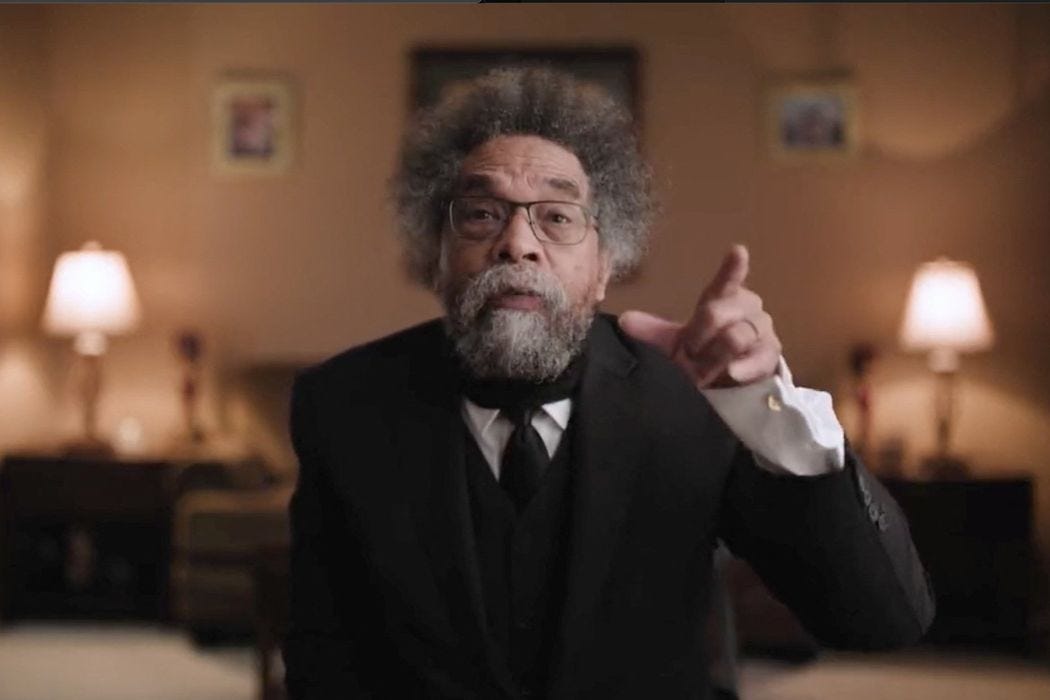
Cornel West’s video announcing his candidacy
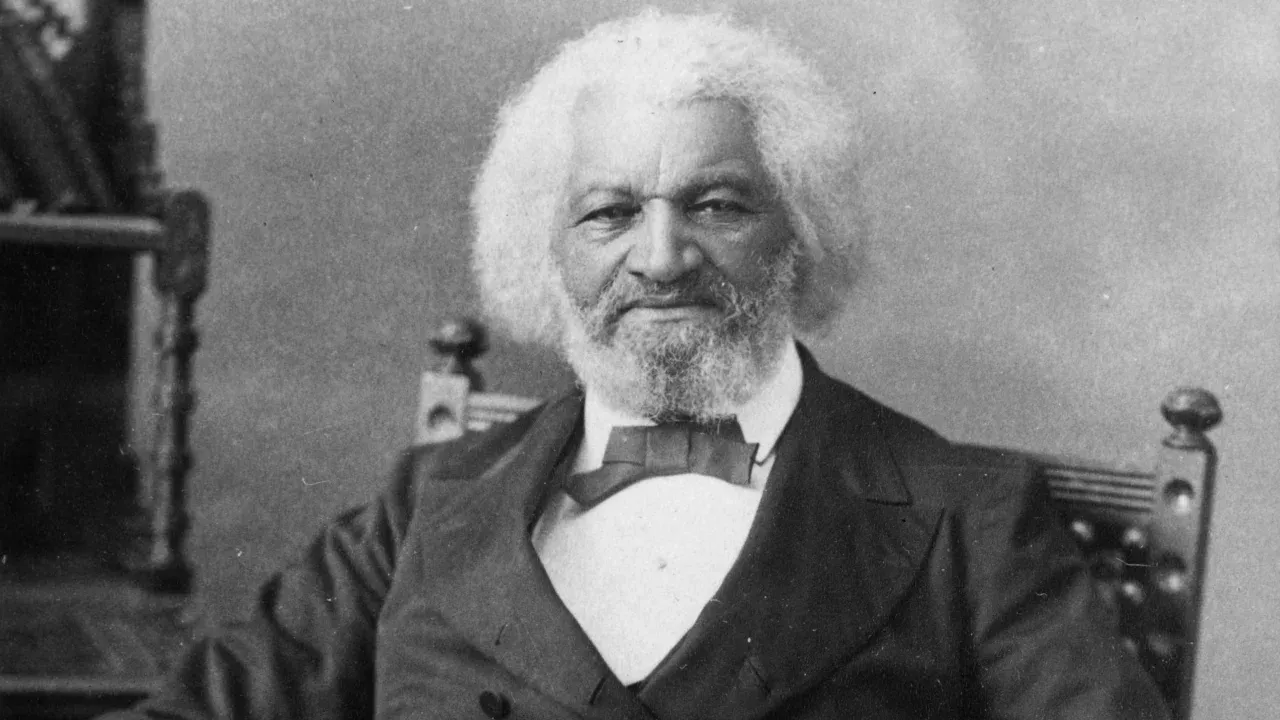
Frederick Douglass
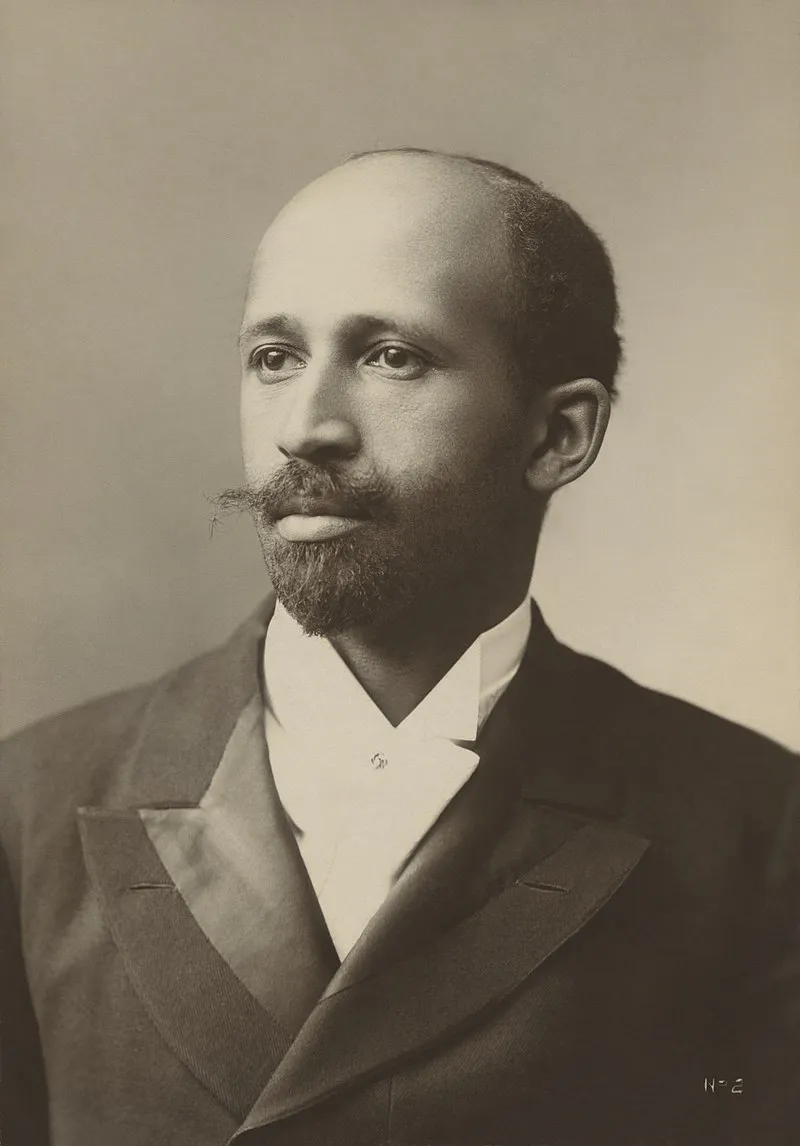
W.E.B. Du Bois
Broadly read in theology, philosophy, and political science, Professor West is a vibrant and visible scholar who has made numerous forays into entertainment, talk shows, political campaigns, and various movements. West sees himself as public intellectual in the tradition of Frederick Douglass and W.E.B. DuBois, two men who worked tirelessly as leaders to inspire African Americans and as gadflies to push American political leaders to walk the straight path on racial issues.
West is an incisive critic and powerful speaker but his audience in the United States is rather limited—granted he has recently tried to reach out broadly through the People’s Party.
I have never met West in person, but we have several friends in common and he was so kind as to send me a thoughtful note of thanks when I mailed him a copy of my book “Fear No Evil.” He clearly cares deeply about common people and has played a leadership role in many movements, granted that he is not inclined towards administrative tasks and strategic planning.
When West states that he is a “jazz man in world politics, and the jazz man is always about improvisation, always about compassion, always about style, and always about a smile,” however, concerns arise that West, a man accustomed to being treated with respect as a tenured professor at Harvard and Princeton, might lack the stamina, the patience, and the tenacity required for what will be, without any doubt, a grueling, brutal and potentially dangerous campaign for the office of the president, one that will be held in a fractured nation shaken daily by the subterranean battles between factions of the military, intelligence and Homeland Security.
Or, at the least, we can say that the campaign will be grueling, brutal and potentially dangerous if he is a serious candidate.
We do not have that much to go on concerning West as a politician because this idea only emerged last month.
The video that launched his campaign features him dressed up like Frederick Douglass delivering a witty and creative improvisational monologue wherein he places himself solidly in the civil rights movement and movements social equality over the last forty years.
He concludes the video with the following words:
“Do we have what it takes? We shall see. But some of us are going to go down fighting; go down swinging—with style and a smile. Accenting the best in you and trying to tease out the best in me.”
Much as I appreciate his fine writing, future failure in the election seems to be baked into this diffident battle cry. West gives the impression that the best we can hope for is to organize a few marches and to take a stand for our beliefs before the movement is crushed beneath the apparatus driven by the corporations, as were the campaigns of Jesse Jackson, and Bernie Sanders (both of whom West worked with closely).
One has to wonder whether West lacks the necessary confidence for a grueling campaign after decades of disappointments. Is he ready to take serious risks, to work day and night with us to create better world?
His website does not offer any way to join his movement other than to collect ballot access signatures, host an event, reach out to others about his candidacy, or become a “social media ambassador.”
In other words, there is no way for you as a citizen to give him your ideas and suggestions via an active group, nor is there any local organization that you can turn to that is involved in making long-term plans to address injustice in American society.
Inviting people to join a movement, but then offering no real means of participation, is pretty much in line with the approach of the Democratic Party since the 1970s. It was this unwillingness of the Democratic Party to support movements—which were threatening to its corporate clients—that doomed the campaigns of Jesse Jackson and Bernie Sanders, campaigns where West learned about presidential politics.
Later, West threw himself into the campaign of Barack Obama and he continued his support of Obama even after it became clear that Obama’s election was a sordid deal in which Americans were given their first African American president and in return the massive theft of money from the Federal Reserve, the militarization and privatization of the federal government, and the crimes of 9.11 and the Iraq War were swept under the carpet. A farcical campaign of “change” was used to keep the same financial players in control of economic policy.
Although we must give West credit for eventually breaking with Obama, he could not stay away from that political party of the damned. He went on to serve as advisor to Bernie Sanders in his bid for the nomination in 2016, and did so again in 2020.
West had the good sense to finally back Jill Stein of the Green Party in 2016 when Sanders immediately endorsed Hillary Clinton after taking mountains of nickels and dimes from working people to pay for his commercials in swing states.
But when things turned more dangerous in 2020, West had no problem backing Biden for president and justifying that act as “anti-fascist.”
In short, West cannot manage to distance himself from the tar baby Democratic Party even as that party lurches to the right. For a man who is inclined to call everyone his “brother” or “sister,” it may be hard for him to draw lines in the sand. But sometimes historical reality demands it.
Also of concern is the complete absence of a discussion of COVID-19 crimes, or of any other major state crimes, on West’s website.
West is a candidate that progressive-minded Americans who lack the psychological preparation to face the horror of COVID-19 can feel comfortable with. Maybe he is appealing to some in the Green Party for precisely that reason; a soothing voice who will not touch on taboo topics, rather than a serious candidate for the presidency.
Let us remember, after all, that West claimed the United States was practicing “vaccine apartheid” towards poor nations that could not afford the expensive COVID-19 vaccines (deadly bioweapons provided by Moderna and Pfizer). Although we should be willing to forgive West for getting caught up in that political scam—we cannot do so if he does not admit that he was wrong in a suggesting that the vaccines were helpful medically.
When thinking about West as a candidate, it is important to note that whereas the 9.11 operation was aimed at conservative fundamentalist Christians, inspiring them to see themselves in a crusade with Jesus against an infidel enemy, the COVID-19 operation was aimed progressive elements, and the “science” of vaccines was tied to gender, identity, and race issues which are popular in that demographic.
West’s previous statements on COVID 19 will become a crippling liability if he runs into a candidate like Kennedy who has fearlessly denounced the vaccines from the very beginning.
And what if West debates Kennedy, who is gearing up to make truth about COVID-19 the main arrow in his quiver?
The COVID-19 scam is not an abstract conspiracy theory any more. The Pfizer papers, and a host of medical documentation, makes the true nature of that slaughter of citizens unbearably clear. By next summer it may be mainstream commonsense that it was a crime against humanity.
That means that West’s claim that,
“I am running for truth and justice and as a candidate for president of the United States in the Green Party. I want to reintroduce America to the best of itself—the dignity, courage, the creativity of precious everyday people.”
could come back to bite him in the near future.
Truth is the most powerful political tool, but it is also an unforgiving master.
Whereas speeches about empathy, solidarity, love, and unity can be inspiring, truth is by its nature undemocratic and uncompromising. We do not vote to determine the truth.
Or perhaps West imagines that he can maintain a politics of “truth and justice” that artistically avoids discussion of 9.11, secret governance, the COVID-19 scam, or the transfer of trillions of tax dollars to private equity via COVID 19 stimulus and quantitative easing?
West is completely right to identify the dangers posed by the Pentagon, big pharma, and Wall Street, but he does not describe how they work, and who exactly benefits from them. Nor does he present a concrete plan for how to take those powers down.
To some extent, this softness in tone that we see in West, even as he assumes an anti-imperialistic position, is common among progressives, especially those who bask in the fading light of the movements of the 1960s. Somehow West feels a need to keep his smile even when confronting the worst of corporate fascism. That refusal to be harsh, even brutal, in confronting the horrors of the current parasite economy is what distinguishes West from Kennedy.
We can certainly sympathize with his basic humanity, but if he is planning to lead a revolution, or stand against fascism, that will require a different posture. Otherwise, he risks being used by the political masters as a safety valve for political frustrations.


